Turning architectural ambition into functional reality requires more than creativity—it demands a clear, strategic roadmap. Noeline Conradie, Co-Founder of SharpMinds Consulting Engineers, explores how carefully planned design prevents costly mistakes and delivers spaces that genuinely serve people’s needs
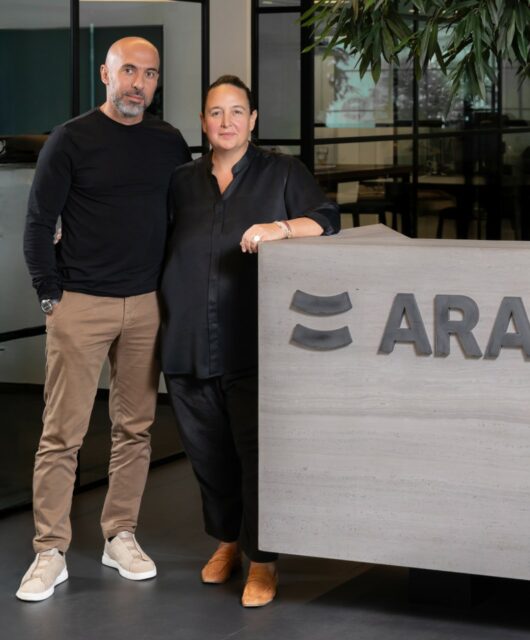
By Noeline Conradie, Co-Founder and Lead Interior Designer of SharpMinds Consulting Engineers
Bringing a new space to life, whether it’s a hospital ward, a school building, an office or a private home, is an exciting process. It’s also a deeply strategic one. In the UAE, we often talk about architecture as a reflection of ambition, and rightly so. But ambition without a clear roadmap can lead to costly revisions, disconnects between form and function, and ultimately a space that fails to serve the people it was intended for.
Designers have a methodology for preventing that. Understanding this process, and preparing for it, can make the difference between a transactional engagement and a truly value-adding partnership. Below is a practical look at how a designer translates vision into reality, and what clients can do to maximise the impact of the collaboration.
Start with clarity of intent
Every successful project begins with a clear exchange of information. Designers will typically begin with an exploratory discussion to understand the client’s objectives, constraints, priorities, cultural preferences and broader vision. At this early stage it is important to go beyond discussions of style. Who will use the space? What kind of behaviors do you want to enable, and what do you want people to feel when they enter?
In the UAE, many projects involve multiple stakeholder layers, from private investors to regulators and end-users. Aligning those perspectives early, and clarifying how decisions will be taken, gives the project a strong foundation. The more clarity there is at this stage, the smoother the journey will be.
Evaluate the conditions, not just the site
Once the brief is established, designers move into site analysis. This is far more than a technical survey; it is an assessment of how the physical and environmental realities will inform the design response. A site that enjoys strong natural light, for example, opens up possibilities for biophilic design and energy efficiency. Equally, a retrofit in a dense urban environment may require a laser-focused approach to spatial planning.
Clients can support this step by granting early access to all available data, including regulatory requirements, adjacency constraints, and any future expansion considerations. In sectors such as healthcare or hospitality, knowing these constraints upfront can significantly streamline the process.
Translate insights into concepts
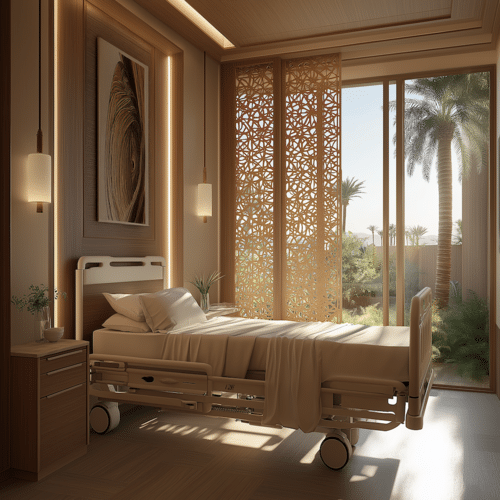
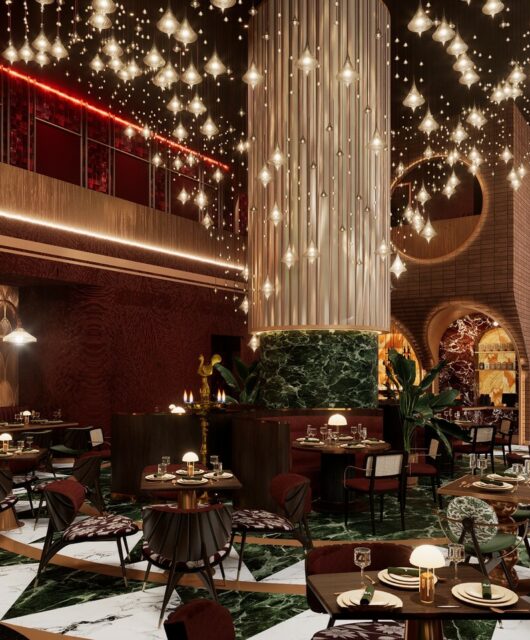
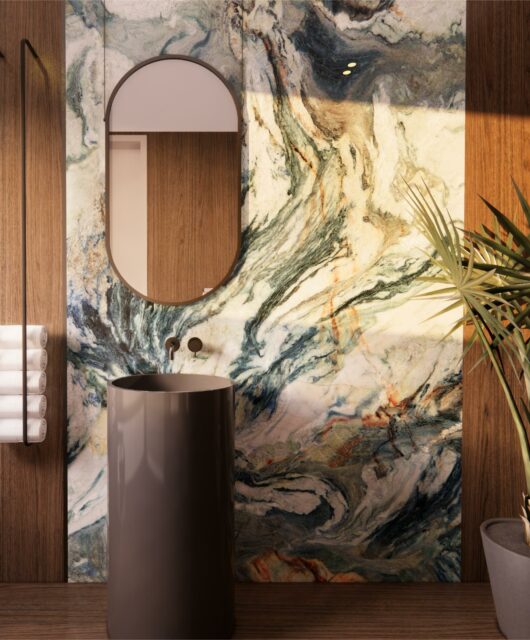
Designers then begin shaping an initial concept, based on research, benchmarking and creative exploration. This includes developing mood boards, interpreting the client’s brand values, and testing possible spatial configurations. In this phase, visualisations become a powerful tool. Sketches and 3D renders allow the client to react to ideas early, before they become embedded in detailed designs.
Clients should use this phase to test alignment: Is the story of the space coming through clearly? Does the design reflect the organisation’s identity and aspirations? The aim should be to make sure the concept is moving in the right direction before more time and resources are invested.
Refine, select and align
Once a direction is agreed, the designer refines the layout and begins selecting materials, finishes and equipment. In the UAE, where a range of environmental and operational realities need to be considered, high temperatures, high-traffic diverse visitor environments, specialised healthcare requirements, these choices have direct implications on performance and longevity.
This is an area where clients can prepare by defining their tolerance thresholds. For example: should sustainable materials be prioritised even if they could carry longer lead times and reqruie specific maintenance? Are there materials the organisation absolutely will not use? Being transparent about these considerations allows for targeted, cost-efficient decisions.
Move into technical definition
Design development is followed by technical documentation: detailed construction drawings, joinery specifications, lighting layouts and integration guidelines. At this stage, the project becomes highly collaborative amongst various industry professionals, as designers coordinate with engineers, specialist consultants and contractors.
The more holistic the client’s expectations are, the more successful this stage will be. A common misstep is to view the process as linear. In reality, there is often a loop between design and technical documentation, a lighting choice might require a change to ceiling height, which may, in turn, affect the mechanical design; a joinery detail might impact mechanical access. Remaining open to this iterative refinement ensures that performance is not compromised in the pursuit of aesthetics.
Seek alignment over approval

Before construction begins, the designer will present the full package, drawings, material schedules, cost estimates, and procurement timelines, and request approval. But in practice, what is really needed at this moment is alignment. Design is rarely a “yes or no” decision; it is a balance of trade-offs. This is especially true in fast-moving markets like the UAE, where design trends evolve quickly and clients often need to calibrate between innovation and practicality.
Approaching this moment as a dialogue, rather than a signature step, helps ensure that decisions are grounded in the project’s original purpose.
Ultimately, design is not about drawing spaces, it’s about translating values, behaviors and aspirations into environments that actively support them. Clients who approach the process with clarity, openness, and structure won’t just end up with a better space; they’ll create a place that truly reflects who they are and what they stand for.