A Refined Vision By P&T Group For Ras Al Khaimah’s Coast
Designed and delivered by P&T Group for RAK Properties, Intercontinental Ras Al Khaimah Mina Al Arab Resort & Spa redefines beachfront hospitality
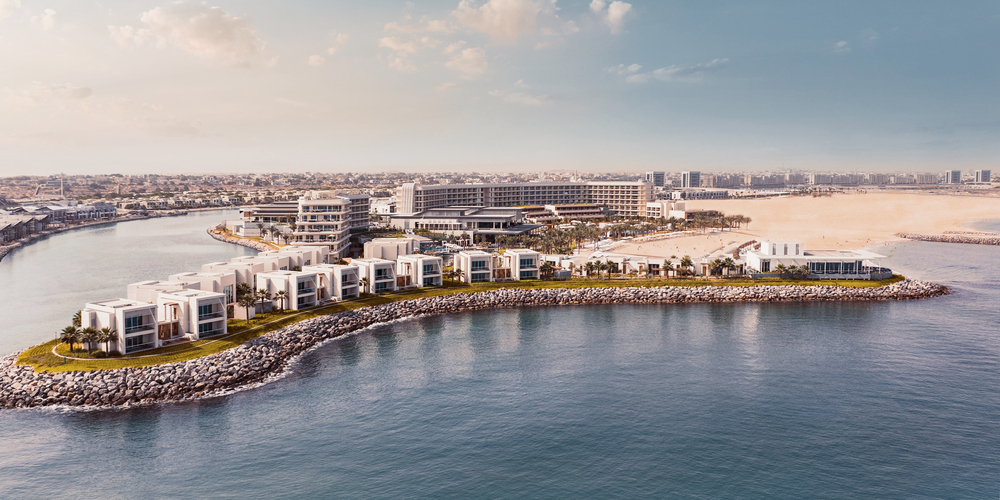
A Contemporary Coastal Benchmark for Ras Al Khaimah
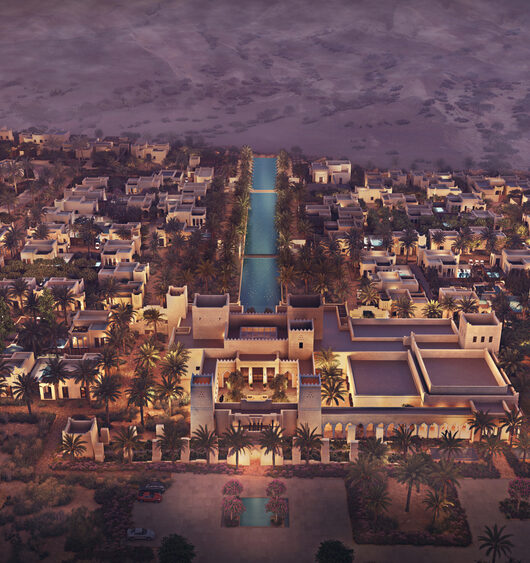
Delivered by P&T Group for RAK Properties, Intercontinental Ras Al Khaimah Mina Al Arab Resort & Spa, is a 43,600 sqm beachfront development and a distinguished addition to IHG Hotels & Resorts’ luxury lifestyle collection, completed in 2021. Leveraging decades of experience in high-end hospitality, including landmark projects such as FIVE Palm Jumeirah, Dubai. P&T Group led the design from concept through to delivery, creating a resort that exemplifies architectural clarity, sustainability, and long-term operational performance.
The resort brings together hotel rooms and suites, beachfront villas and chalets, alongside a comprehensive mix of dining, wellness and leisure facilities. A large spa, multiple swimming pools, destination restaurants and conference and event spaces are integrated into a carefully considered masterplan, reinforcing the project’s role as both a leisure destination and a regional hospitality hub.
Responding to Ras Al Khaimah’s evolving identity
Located within the Mina Al Arab masterplan, the resort occupies a prominent headland defined by a rare dual-waterfront condition, with a natural beach on one side and a manmade waterway on the other. As Ras Al Khaimah continues to position itself within the UAE’s hospitality landscape, the project plays a key role in shaping a more understated, design-conscious resort identity for the emirate.
Rather than competing for visual dominance, the architecture adopts a measured, contextual approach. Low-rise forms, generous landscaping and carefully controlled massing allow the development to sit comfortably within its surroundings, reinforcing Mina Al Arab’s broader coastal vision while maintaining a strong sense of place.
Design strategy and masterplanning
The original brief called for a contemporary tropical resort with a strong relationship to landscape and water. As the project progressed, the scope evolved to accommodate an increased number of keys, rising from approximately 300 to 350. This shift required a strategic masterplanning response, increasing density while preserving privacy, openness and the resort’s relaxed character.
P&T’s solution was a distributed planning strategy, breaking the programme into a series of interconnected buildings rather than a singular dominant mass. This approach maximised sea views across the majority of guest spaces, improved environmental performance and allowed landscape to remain a defining element of the guest experience. Circulation is intuitive and fluid, reinforcing a seamless transition between indoor and outdoor environments.
Architectural language and material restraint
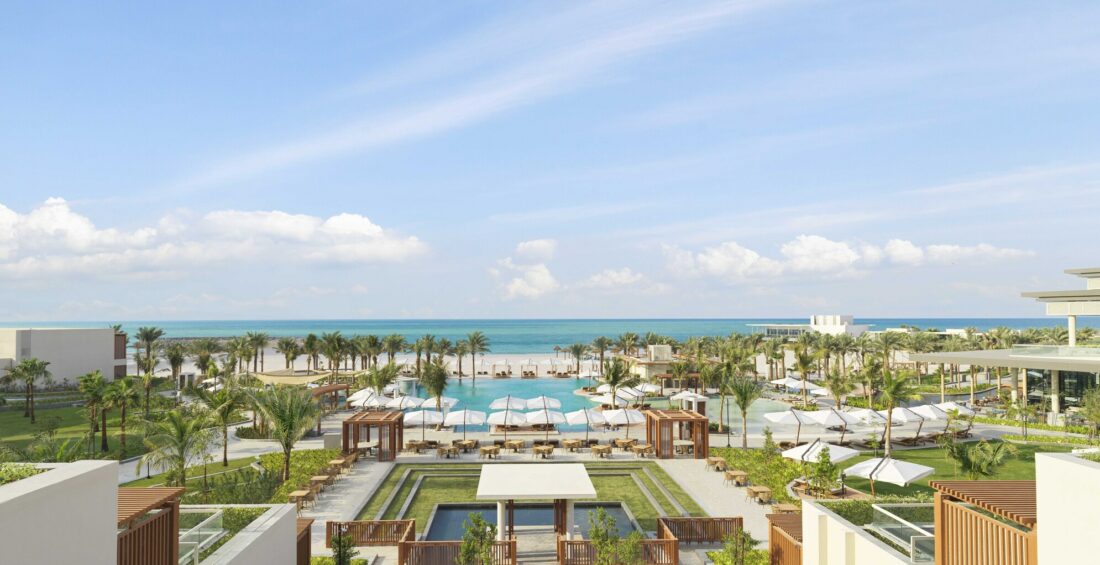
Architecturally, the resort is defined by a calm, contemporary language that prioritises proportion, durability and environmental response. White rendered façades are layered with shading devices, pergolas and screens in aluminium, GRP and wood-plastic composites, creating depth while mitigating solar gain. Natural stone is introduced at ground level and within key public areas, grounding the architecture and reinforcing a sense of permanence.
Rather than relying on overt decorative gestures, the design is deliberately restrained. Materiality, light and shadow are used to create visual interest, ensuring the architecture remains timeless and adaptable over the long term, a critical consideration for resort developments of this scale.
Sustainability as a core design driver
Sustainability played a central role in shaping both design and technical decisions, with a clear focus on long-term operational efficiency. Flat plate solar hot water collectors were integrated to meet approximately 60-70% of the hotel’s hot water demand, delivering an estimated payback period of around 4 years. This approach allowed environmental performance to be aligned directly with commercial viability, a critical consideration for large-scale hospitality developments.
Mechanical and electrical systems were designed with long-term performance in mind. High-efficiency chillers, heat recovery systems and energy recovery devices reduce operational energy demand, while LED lighting and intelligent controls are implemented throughout. External lighting and landscape illumination are managed through photocells, timers and building management systems, balancing guest comfort with efficiency and reduced operating costs.
Reflecting on the project’s long-term performance, Moemen AbdElkader, Associate Director at P&T Dubai, highlights the importance of real-world feedback in shaping successful hospitality environments:
“ InterContinental Ras Al Khaimah Mina Al Arab Resort & Spa stands as a one-of-a-kind hospitality landmark, establishing a regional benchmark since its inauguration in 2021. We value the continuous feedback from end users and guests, as it provides critical insight into how the architecture performs in real conditions, across both short-term experiences and daily operations.
The project’s success lies in the careful orchestration of Front-of-House and Back-of-House environments, where spatial efficiency, operational clarity and user experience are seamlessly integrated. This architectural harmony is fundamental to delivering a truly successful hospitality building.”
Delivering long-term value
Completed in 2021, Intercontinental Ras Al Khaimah Mina Al Arab Resort & Spa stands as a clear demonstration of P&T’s ability to deliver complex, multidisciplinary hospitality projects from concept to completion. The project reflects a design approach rooted in experience, one that understands the realities of construction, operation and lifecycle performance while maintaining architectural integrity.
As RAK continues to grow as a destination for high-end hospitality, the resort serves as a benchmark for contemporary coastal development, aligning design ambition with environmental responsibility and long-term value.