Bluehaus Redefines Public Sector Design With New MEP HQ In Riyadh
With its latest office project, Bluehaus, a TP Bennett company, has redefined the workplace for Saudi Arabia’s Ministry of Economy and Planning
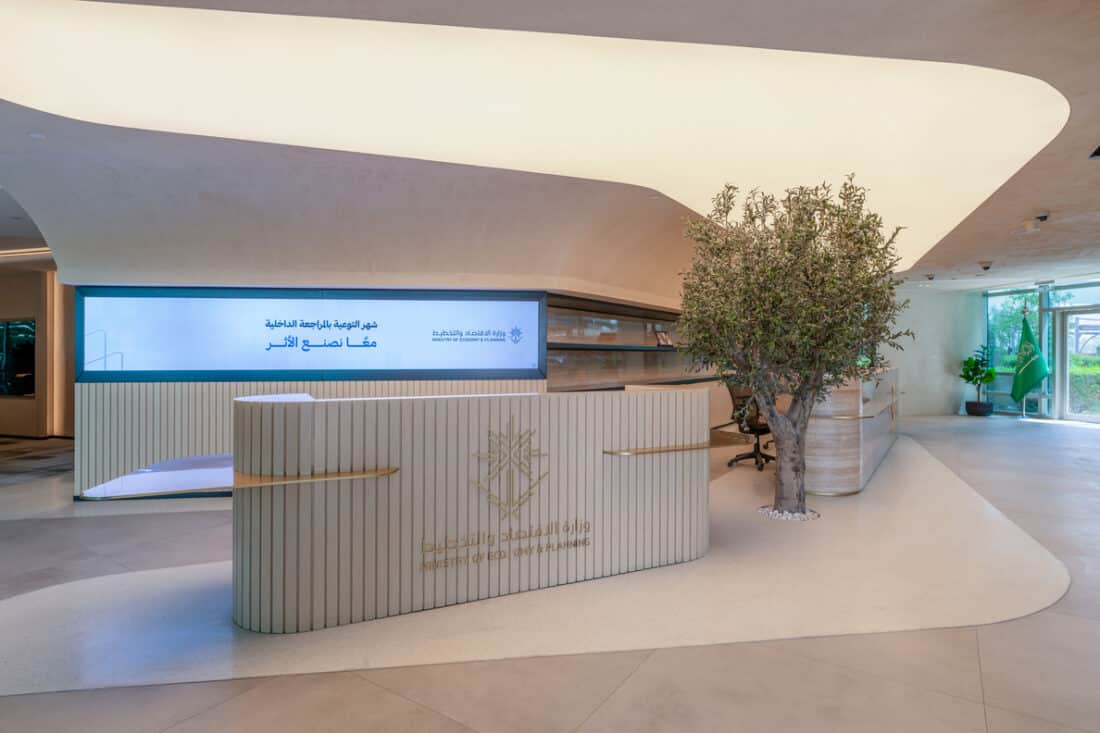
With its latest office project, Bluehaus, a TP Bennett company, has reimagined the Ministry of Economy and Planning headquarters in Riyadh, delivering a workplace that quietly sets a new benchmark for thoughtful, future-ready design in Saudi Arabia’s public sector. Located in Granada Business Park and spanning 20,000 sqm across two interconnected buildings, the project goes beyond aesthetics to deliver a fully immersive, purpose-driven environment that reimagines how the public sector works, both physically and culturally.
“From the moment we met the Ministry’s leadership team, we knew this project would be different,” said Ben Corrigan, principal director at Bluehaus. “There was a genuine desire to rethink not just the physical space, but the culture of work within it. That level of ambition was exciting, and it set the tone for a truly collaborative and transformative design process. We are proud to have delivered a workplace that reflects His Excellency’s vision and energises the MEP family.”
Designed in close partnership with the Ministry team, the new headquarters replaces previously siloed, static layouts with a workplace model that prioritises flow, adaptability, and connection. Early-phase floors were treated as testing grounds—where configurations were piloted, feedback gathered, and improvements refined before being implemented across the full 20,000 sqm. The result is a space that uses every square metre efficiently and intentionally, supporting both operational needs and cultural transformation.
A narrative rooted in place
Guided by the concept “Sandstone Serenity: A journey through Saudi landscapes,” the headquarters brings Saudi Arabia’s natural topography to life, such as desert, coast, mountains, and caves, each represented through design elements across various floors and zones. Reception desks crafted in sandstone, breakout lounges that evoke mountain retreats, and textured walls inspired by ancient cave formations together form a spatial experience that is immersive, grounded, and unmistakably local.
“The client, the Ministry of Economy and Planning, wanted us to reimagine the workspace,” said Amber Alston Peters, associate – creative design at Bluehaus. “Given that it’s a government institution, it was important to embed a sense of cultural identity. We developed a narrative that takes users on a journey through Saudi’s diverse environments—from desert to coast, from caves to mountains.
A purposeful spatial journey
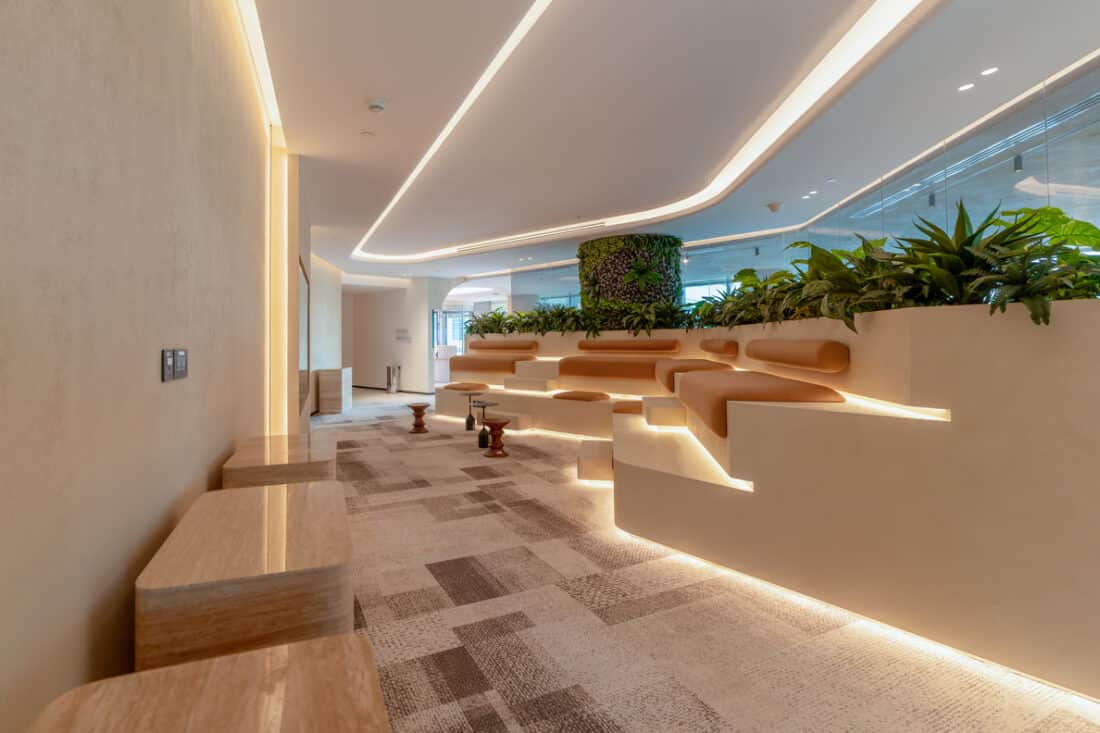
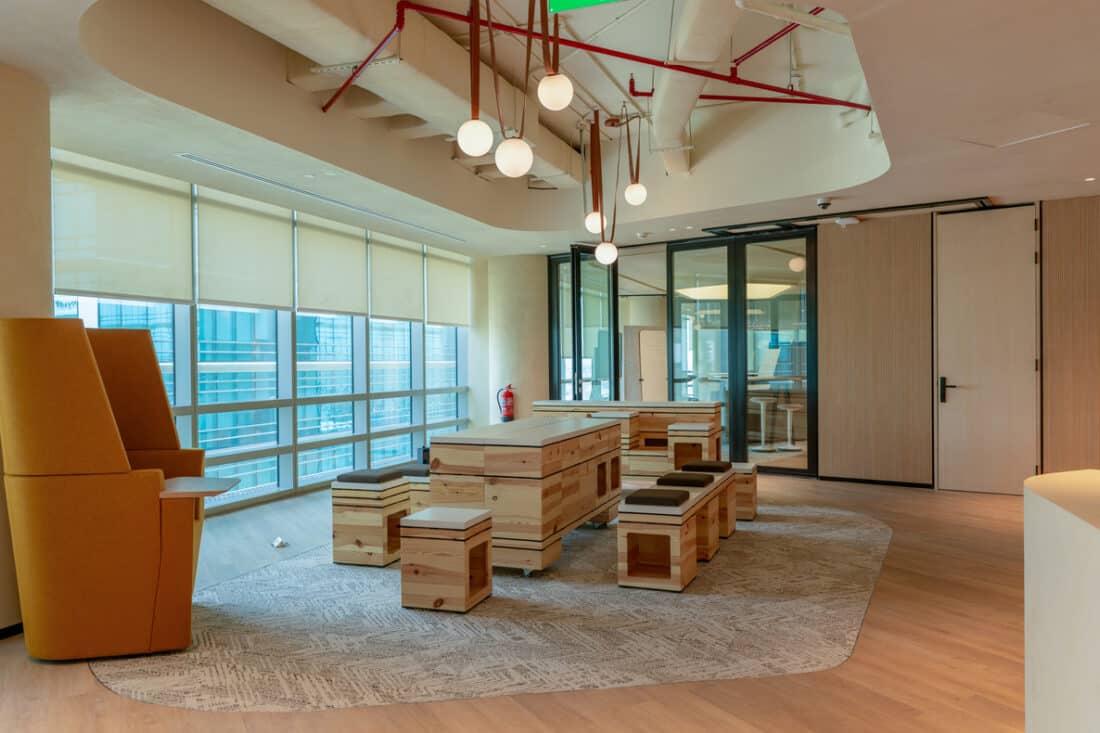
The design embraces agile working principles through a clear and intuitive zoning strategy. Focus zones, informal lounges, brainstorming spaces, and shared cafés are distributed across floors, giving individuals and teams the flexibility to choose how they work. Room names such as Lair, Oasis, Ascend, and Summit reinforce the spatial narrative, while the furniture, textures, and lighting offer cohesion and calm.
“What made this project stand out was the collaborative spirit while developing a workplace strategy with the client,” said Adil Amin, head of interior design at Bluehaus. “We piloted layouts on early-phase floors, gathered feedback, and made strategic adjustments before implementing across the full 20,000 sqm. It was real-time co-creation.”
A refined material palette, featuring oak tones, textured upholstery, soft lighting, and bronze accents, creates a setting that balances comfort with formality. Sculptural seating, semi-private pods, and acoustic baffles are integrated to ensure the space remains adaptable without sacrificing focus.
Scale, complexity, and cultural relevance
Spanning more than 25 floors across two buildings, the headquarters includes gallery spaces, IT showcases, agile zones, executive suites, and collaborative hubs—each uniquely programmed but tied together through a consistent narrative.
Throughout the space, floor-to-ceiling glazing ensures natural light and visual connection to the outdoors, reinforcing Bluehaus’ human-centric approach. Materials were selected for their sensory quality and environmental resonance, resulting in a setting that is both calming and sophisticated.
“It’s amazing to see how the story and the function came together,” Peters added. “This was never about applying a fixed aesthetic—it was about responding to real needs, in real time, through thoughtful design.”
The Ministry of Economy and Planning headquarters represents a confident new direction for the public sector, one that respects cultural heritage while embracing innovation and change. As the Kingdom progresses toward Vision 2030, this project offers a model for how government institutions can lead by example in design, adaptability, and collaboration.