Design As Strategy: How RHC Builds Purpose-Led Urban Ecosystems
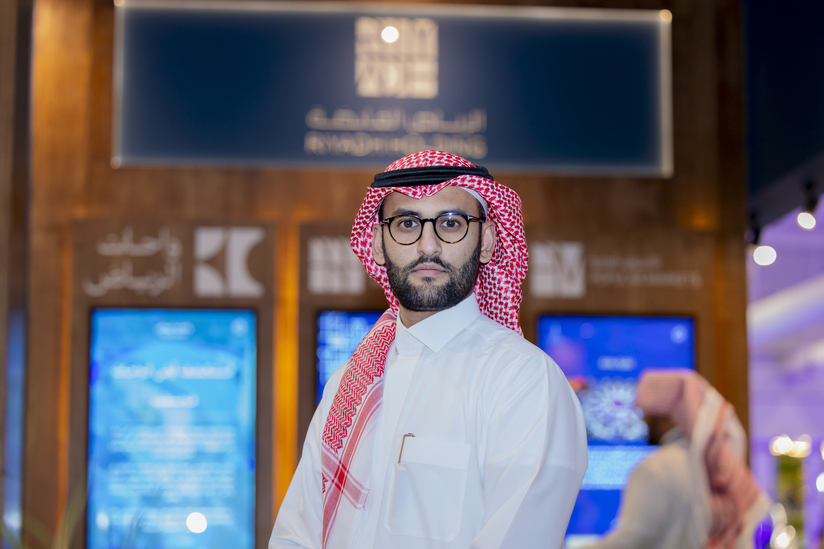
Eyad Alattas – Director of Development and Design shares how at Riyadh Holding Company (RHC), design is the strategic foundation of every development, not an afterthought
- How would you describe RHC’s overall design philosophy, and how does it guide the early stages of every project?
At Riyadh Holding Company, design is not treated as a visual layer added later—it is the strategic foundation of every project. Our philosophy is rooted in purpose-led, human-centred, and context-responsive design, guided by a strong “Riyadh-First” mindset. We aim to create ecosystems, not just buildings. Developments that enrich the experience of citizens while contributing to the city’s long-term urban quality.
In the early stages, design becomes a decision-making tool rather than a purely aesthetic exercise. We begin by understanding the cultural context, urban fabric, mobility patterns, and social needs of each site. From there, land use, public space allocation, connectivity, and built form are shaped through design thinking that balances community value, operational performance, and financial sustainability. This ensures that from day one, every project contributes meaningfully to Riyadh’s evolution, not just to real estate supply.
2. Riyadh is undergoing major transformation; what role does human-centred design play in shaping districts, mobility, and public spaces?
Human-centred design is the invisible force shaping how Riyadh feels, not just how it looks. At RHC, we design districts from the pedestrian outward, not the car inward. That shift changes everything—mobility options, shade strategies, walkability, social nodes, and the way people connect to spaces.
Mobility is no longer just about movement—it is about experience. Public spaces must invite people to stay, not just pass through. Whether through micro-climate design, shaded corridors, activity layering, or visual permeability, the city becomes more humane. In a rapidly transforming metropolis like Riyadh, human-centred design is what ensures growth does not come at the cost of livability.
3. RHC follows a “Design – Develop – Operate” model. In practical terms, how does design influence long-term planning and operational outcomes?
This model fundamentally changes how we think about design responsibility. Because we operate what we design, every material choice, spatial decision, and infrastructure layout must perform not only on opening day—but for decades.
Design directly affects operational costs, maintenance strategies, energy consumption, crowd movement, scalability, and adaptability. A well-designed project is operationally resilient. We design for lifecycle performance, not short-term delivery metrics. This alignment removes the traditional gap between designers, developers, and operators and creates accountability across the full asset life.
4. Could you highlight one or two signature projects where design thinking significantly shaped the concept, community value, or urban experience?
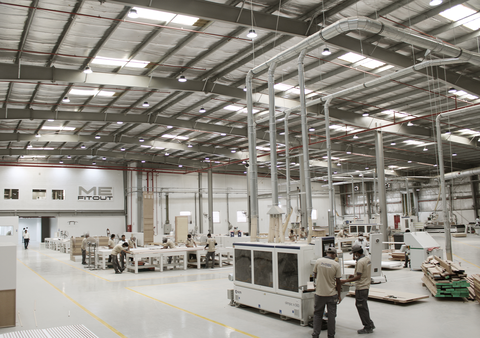
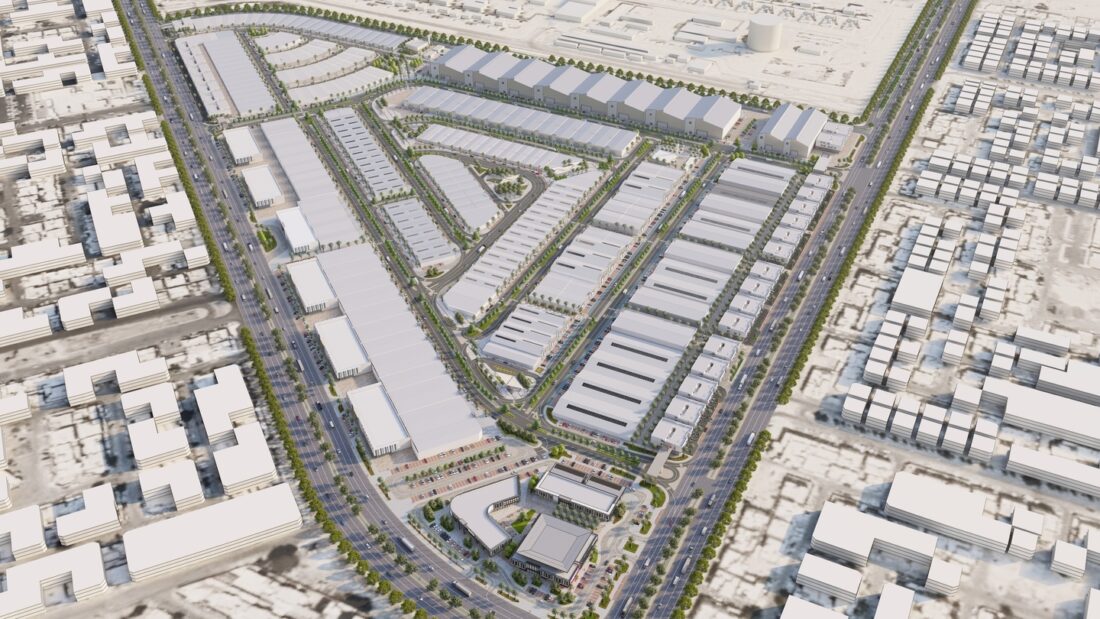
Several RHC projects demonstrate how design thinking reshapes urban value beyond commercial metrics. One notable example is an industrial urban regeneration development where we reimagined a purely utilitarian zone into a more integrated urban environment. Through design-led intervention, we restructured land use, intensified functional mix, introduced pedestrian access, and layered a connected green network across the development. This transition transformed a closed industrial fabric into a more permeable, efficient, and environmentally responsive district—one that supports productivity while enhancing worker wellbeing and urban connectivity.
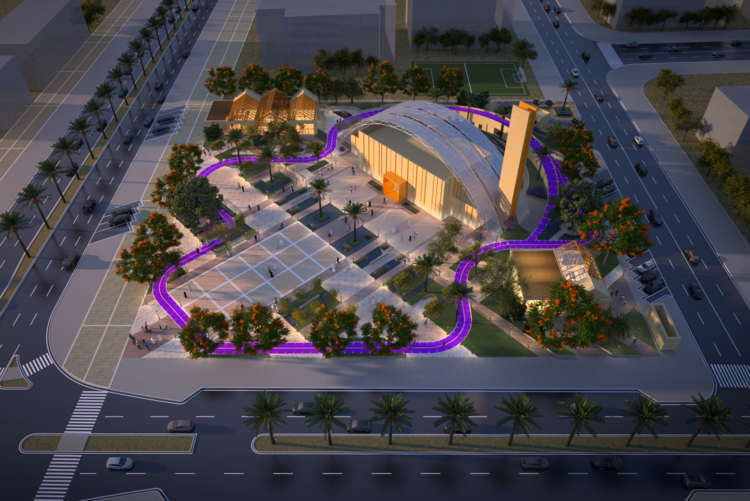
A second example is a public realm regeneration program where we transformed an underutilized asset into an educational and entertainment destination. This program—Riyadh Oases— developed as an interactive urban experience. The design focuses on immersive learning, cultural engagement, and community participation. What was once a static asset is now a living, evolving public destination that educates, entertains, and inspires—demonstrating how design can convert infrastructure into social and cultural value.
5. Looking ahead, what design priorities will define RHC’s next phase and further position Riyadh as an innovative global city?
Looking ahead, three key priorities will shape RHC’s next phase: climate intelligence, digital integration, and cultural authenticity. Climate-responsive design will move beyond passive shading to fully integrated environmental systems that optimize energy performance and outdoor comfort.
Digital layers will increasingly shape how people navigate, interact with, and personalize their urban experience. Equally important is deepening architectural expression rooted in Saudi identity—not through imitation, but through contemporary reinterpretation. Riyadh’s innovation will not come from copying global cities, but from exporting its own spatial language to the world
6. How does RHC’s mandate as a public urban developer enable a design approach that prioritises community value over traditional commercial drivers?
Unlike purely private developers, RHC carries a dual responsibility: to achieve financial sustainability while delivering tangible social value. This mandate allows us to invest in public realms, social infrastructure, and urban resilience while maintaining strong commercial discipline.
Community value and financial performance are treated as aligned—not competing—objectives. Successful developments must be economically viable, operationally efficient, and at the same time enrich daily life for Riyadh’s residents. This balance ensures that our projects are not only profitable assets, but lasting contributors to the city’s quality, identity, and long-term prosperity.