Dubai’s Quiet Revolution In Design And Urban Living
Dubai has built a reputation for bold, boundary-pushing architecture. Yet alongside the spectacular, the city is quietly embracing design that matters on a human scale
Dubai’s skyline has long been a symbol of ambition, defined by towers that stretch upward and masterplans that redraw entire districts. From the Burj Khalifa’s record-breaking height to the futuristic curves of the Museum of the Future, the city has established itself as a global stage for bold architectural expression. Yet alongside these landmarks, a quieter shift is underway — one that places emphasis not on spectacle, but on how space is experienced in everyday life.
As residents increasingly prioritise comfort, adaptability, and community, developers are rethinking what home should mean in a city known for its rapid growth. This evolution is particularly visible in emerging districts such as Dubai South, planned in line with the Dubai 2040 Urban Master Plan. Here, residential neighbourhoods are integrated with green spaces, schools, and infrastructure including Expo City and the future Al Maktoum International Airport. The architecture reflects a balance between modern forms that anticipate growth and layouts that respond to daily routines.
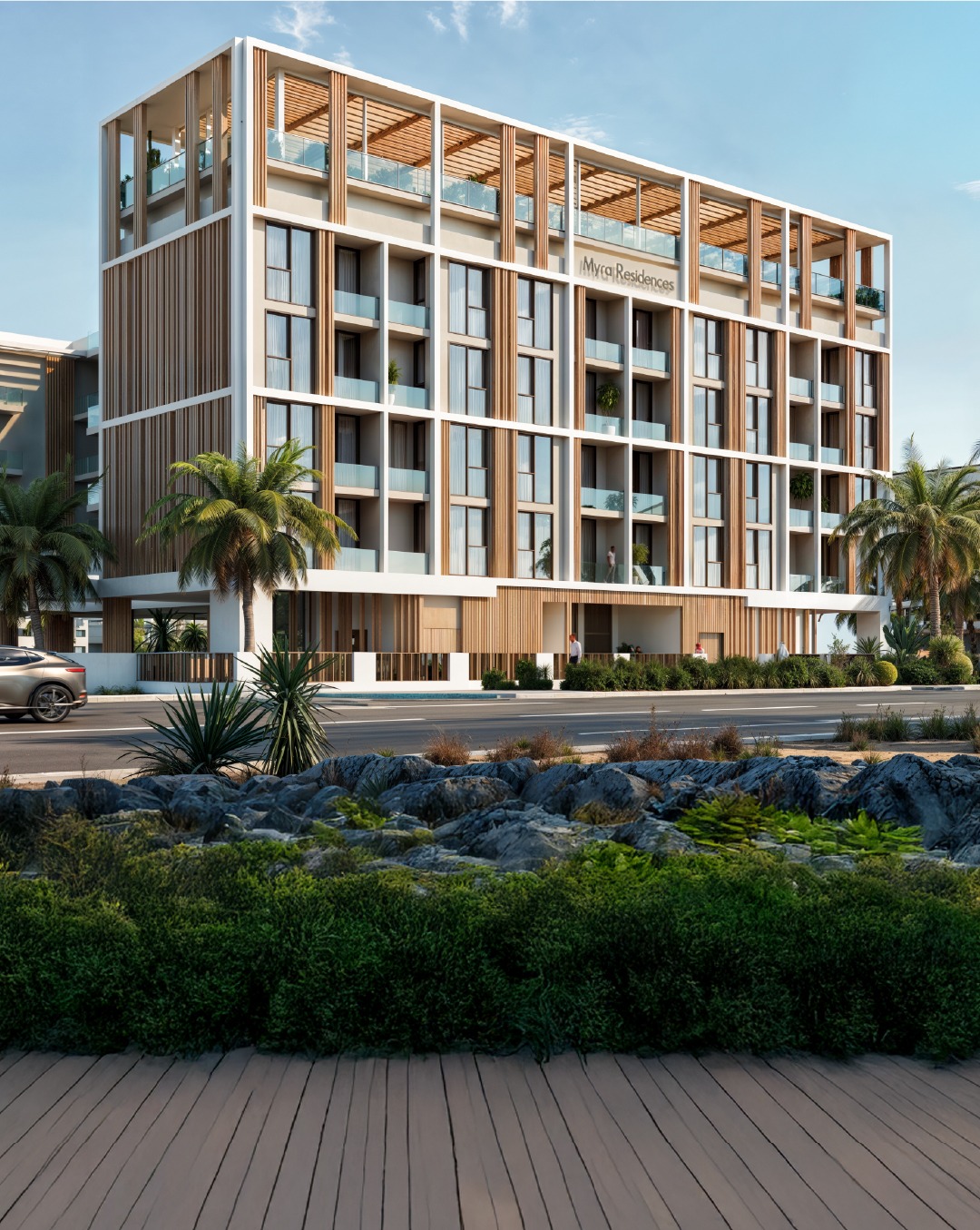
Within this context, Sikanta Developments has introduced Myra Residences, a project that illustrates how design philosophies are shifting toward livability. Generous layouts form the foundation of the scheme, offering residents the flexibility to personalise their homes. Two-bedroom units include en-suite bathrooms, a maid’s room, and two parking spaces — features conceived not as add-ons but as practical necessities that support family life. Even studio apartments are designed with proportions equal to, or in some cases larger than, one-bedroom units offered elsewhere, challenging conventional ideas of compact living.
The development’s boutique scale is complemented by amenities that foster a sense of community. Tropical-style landscaping, interconnected pools, and shared outdoor areas are intended as spaces for interaction and relaxation, reflecting how communal environments have gained importance in an era of remote and hybrid work. Architecturally, the project favours timelessness over trend. Myra’s façade is defined by clean lines and durable finishes, designed to remain relevant as tastes evolve and to withstand the cycles of fashion that often shape urban skylines.
Sikanta’s approach also acknowledges the dynamics of Dubai’s property market. While smaller units often fluctuate with investor demand, larger homes with thoughtful layouts tend to endure across economic cycles. By focusing on spacious living and everyday practicality, the developer positions its projects as stable choices for families and long-term residents.
Taken together, these elements reflect a broader movement in Dubai’s architectural landscape. The city will continue to celebrate bold gestures and iconic structures, but its residential fabric is increasingly telling a different story — one of adaptability, wellbeing, and thoughtful design. Myra Residences, and projects like it, suggest that longevity and comfort are becoming as integral to Dubai’s identity as its skyline.