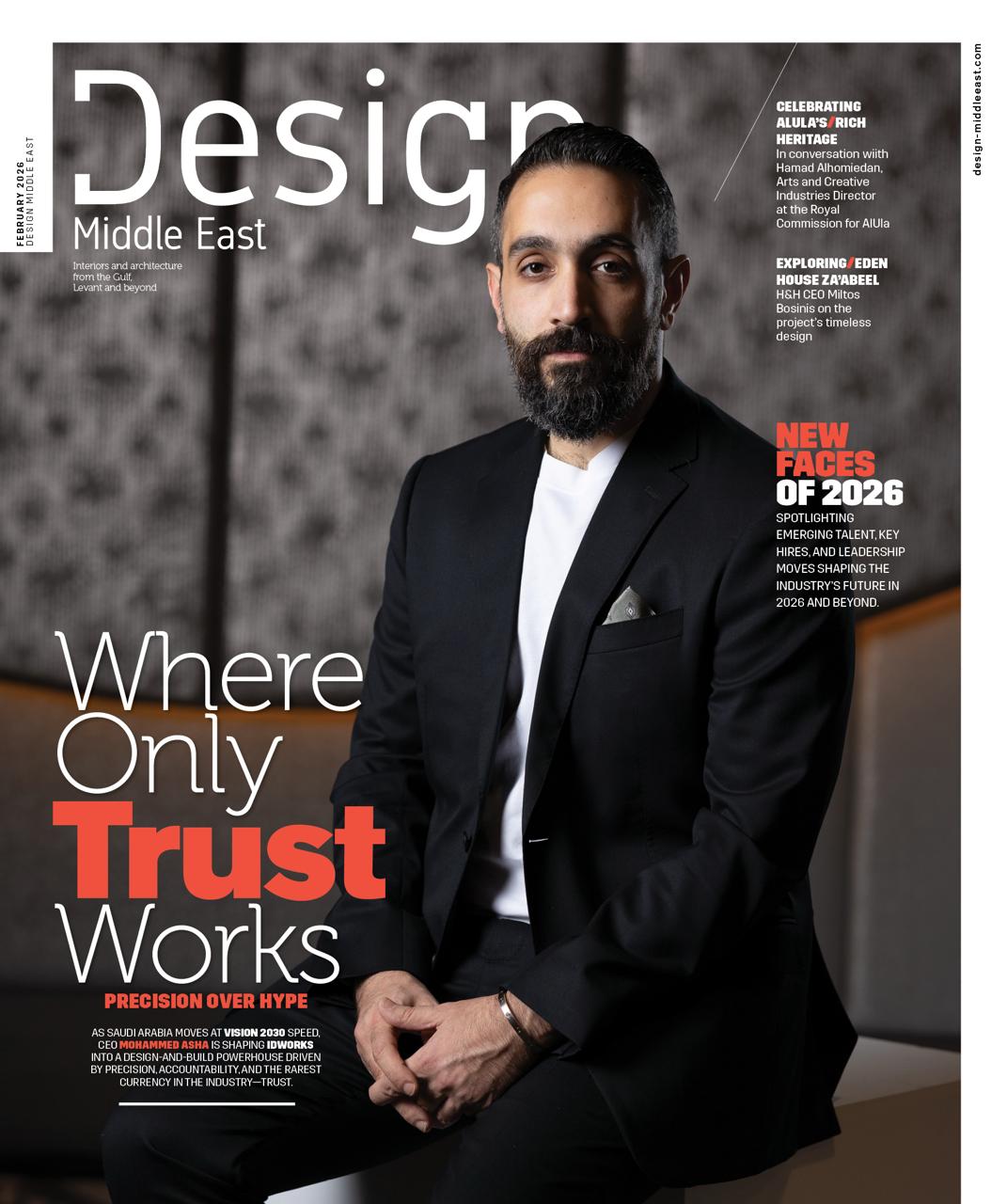
IDWorks: Where Trust Works As The Foundation
CEO of idworks Mohammed Asha reflects on shaping a future-ready design-and-build powerhouse aligned with Saudi Arabia’s Vision 2030—where trust isn’t promised, but proven
BY ROMA ARORA | IMAGES OF MOHAMMED ASHA BY JOEL AMPARO
Young, dynamic, and rentlessly ideas-driven, Mohammed Asha is quietly shaping one of the region’s most trusted design-and-build firms—one built on the same foundation the industry values most: trust. As Chief Executive Officer of idworks, he leads an expanding operation across Saudi Arabia, the UAE, and Jordan, guided not by noise or short-term wins, but by precision, accountability, and human centered design.
“I became aware of the powerful impact design has on people’s behaviour and productivity — and that insight became the foundation of my journey. I understood that spaces don’t just support people, they shape how they perform, interact, and feel within a space,” he says.
That awareness has evolved into a leadership philosophy that blends creativity with execution, vision with discipline, and ambition with long-term thinking. In a region defined by rapid transformation, Asha’s approach feels both timely and enduring —rooted in credibility, driven by delivery, and grounded in the bellet that trust is earned through consistency.
Formative Years Where Mindset Takes Shape
Long before idworks became associated with high-profile projects and complex delivery, Asha’s mindset was shaped by values instilled early in life—values that continue to define how he leads today.
“I grew up in an environment that emphasised hard work, adapt-ability, and responsibility, which shaped my mindset early on. That kind of upbringing teaches you discipline, and it teaches you that results are earned through effort and consistency,” he says. Education played a defining role in sharpening both sides of his thinking, strengthening his ability to balance logic with creativity. My education strengthened both my analytical and creative abilities, and I was always drawn to how spaces are designed and built. I was interested in understanding the thinking behind design and how spaces are formed, not just how they look,” he adds.
But it was his early exposure to different environments and cultures that gave him a deeper understanding of how the built environment influences people at a fundamental level. For Asha, design was never just visual—it was behavioural, emotional, and deeply human.
“Early exposure to different cultures and environments made me aware of the powerful impact design has on people’s behavior and productivity. It made me realise that design affects how people interact, how they work, and how they feel in their daily environment,” Mohammed says. That insight didn’t fade. It became the foundation of his career, his ambition, and eventually, his business.
Finding Design Through Instinct Not Intention
Unlike many leaders who follow a rigid blueprint, Asha’s journey into design unfolded organically. It was not a strategic decision—it was instinctive.
My passion for interior design came naturally. I found myself always wanting to enhance the spaces I was in — to improve how they looked, felt, and functioned. Over time, I realised this wasn’t just an interest, but something I genuinely loved doing,” he says.
It was a mindset rooted in curiosity and observation—one that sees a space not as a finished product, but as something that can always be elevated, refined, and improved. The design-and-build industry offered the perfect alignment between imagination and execution, between creativity and responsibility.
“The design-build industry became the perfect path for me, as it allows me to turn that passion into real, built environments that people experience every day. It’s not only about ideas-it’s about bringing those ideas to life and ensuring they deliver impact,” he adds.
For Asha, the attraction was always in the full process: con-cept, planning, execution, and delivery. It was the challenge of turning vision into something real, functional, and lasting.
The Leap of Faith That Built idworks
Every founder’s journey begins with risk, and for Asha, founding idworks was a leap of faith driven by clarity. He didn’t start the company to simply participate in the industry —he started it to raise expectations within it.
“Starting idworks was a leap of faith driven by a clear vision. I saw a gap in the market for a design-build firm that could truly bridge creativity with execution – delivering spaces that were not only well-designed, but also built with precision and accountability,” he says.
At the time, fragmentation was common. Design and execution often operated in silos, creating gaps in responsibility and inconsistency in outcomes. Asha saw the opportunity to build something different-an end-to-end partner that clients could trust.
“The opportunity was to create a company that clients could trust from concept to completion, without compromising on quality, detail, or experience. That was always the goal—to create confidence and reliability, not just deliver projects,” he explains.
But early growth came with pressure. The first years were defined not by scale, but by proving credibilit —and it is something that mattered then, and still matters most to Asha today.
“In the early days, the main challenge was building trust and credibility. Every project was an opportunity to prove our standards under pressure and high expectations. You are judged by how you deliver, and the market only believes you when you perform consistently,” Asha says.
Those challenges shaped the leader he is today. “Those experiences shaped my leadership to be hands on, disciplined, and accountable — focused on long-term relationships, not quick wins. In this industry, success is built on trust, and trust is built on delivery,” he adds.
Growth That Reflects Maturity Not Just Scale
Fast forward to today, and idworks stands as a trusted partner on some of the Saudi’s most prestigious and demanding developments. Over the past year, the company has strengthened its position with PIF entities and semi-govern-ment clients, expanded its portfolio, and recorded consistent growth.
“Over the past year, idworks has strengthened its position as a trusted partner on some of the Kingdom’s most prestigious projects, particularly with PIF entities and semi-government clients. We’ve seen consistent growth in revenue, expanded our portfolio, and deepened long-term client relationships,” Asha says. For him, these milestones reflect something deeper than commercial success.
“These milestones reflect not just growth in scale, but maturity — in how we deliver, collaborate, and lead complex projects at the highest level. It shows the evolution of our systems, our teams, and our capability to operate at a different level,” he adds The company’s transformation journey became a defining chapter of that evolution. It wasn t triggered by internal ambition alone— it was driven by the pace of Saudi Arabia itself.
“The transformation was driven by the pace and ambition of Saudi Arabia’s Vision 2030. As national projects grew in scale and impact, it became clear that idworks needed to evolve to meet these aspirations,” he says. So idworks strengthened its foundation from within.
“So far, we have strengthened our organi-sational structure, upgraded our systems, and aligned our capabilities with the demands of Vision 2030 – positioning idworks as a future-ready partner for the Kingdom’s next phase of development,” he explains.
Technology, Talent, and Execution
Innovation at idworks is not treated as a trend. It is treated as infrastructure—built into the company’s strategy, delivery model, and long-term competitiveness.
“Our focus has been on building the right foundation. We invested in top talent, advanced systems, and integrated capabilities — and we also established special-ised companies to lead the integration of technology into our work,” Asha says.

That investment is designed to create a business that can scale without losing control of quality. “This approach allows us to deliver smart-er, more efficient solutions and positions idworks among the first in the market to embed technology as a core part of the design-and-build process, not an add-on,” he adds.
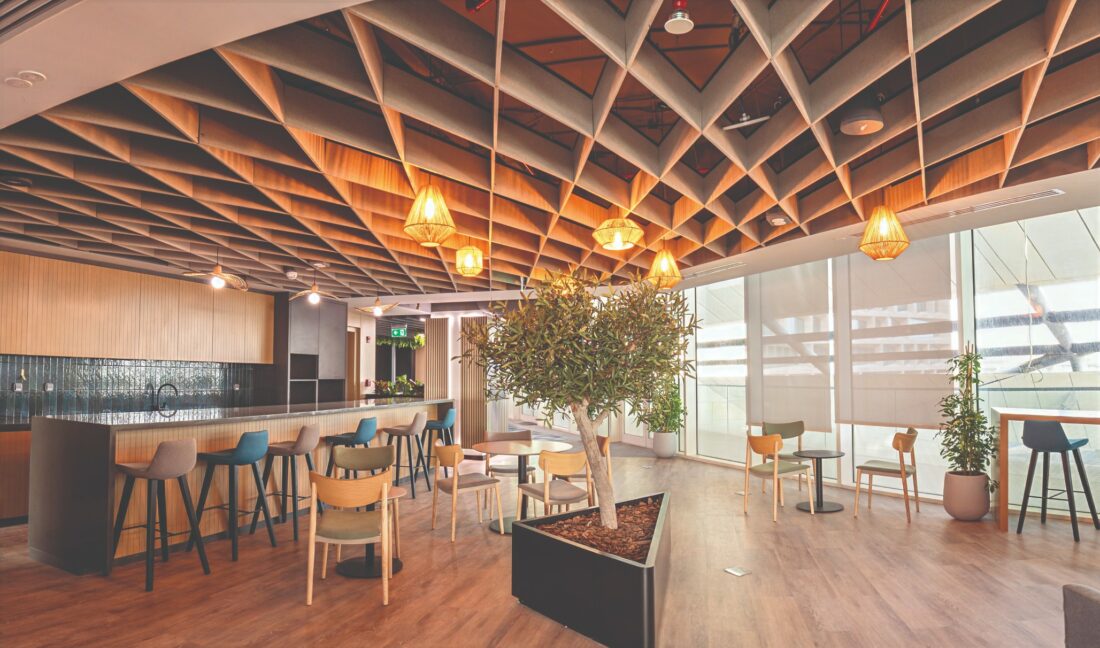
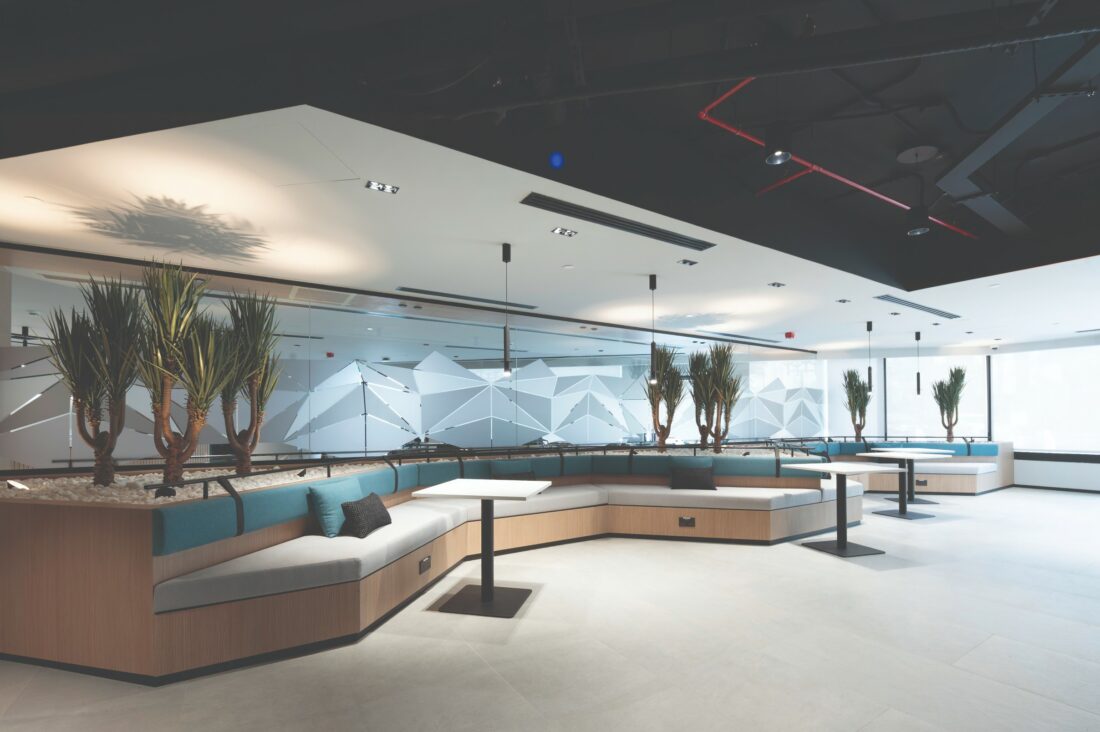
The results are evident in the types of projects idworks is trusted to deliver. Developments such as Savvy Games Group and NEOM Executive Offices reflect the company s evolution into a high-performance operator capable of delivering complexity at the highest level.
“Recent projects such as Savvy Games Group and NEOM Executive Offices clearly reflect how far id-works has evolved in scale, complexity, and ambition. These projects required a high level of coordination, innovation, and precision — and they demonstrate our ability to deliver at the highest standards,” Asha says with pride.
Preserving Values While Moving at Vision 2030
Speed
As idworks scales, its internal culture remains a priority. For Asha, growth means nothing if values are compromised.
“As we scale, our core values remain non-negotiable. We’ve focused on building a strong people-first culture where account-ability, collaboration, and ownership are lived daily — not just written values,” he says.
Speed is essential in a market defined by transformation, but precision remains the company’s differentiator. The key lies in idworks’ integrated model. “Our design-build model is the key advantage. It allows us to work with a clear, methodical approach where design, execution, and commercial strategy move as one,” Asha explains.
That structure gives the company clarity on where to push and where to protect quality. “We know exactly where to apply precision, where to optimise, and how to deliver the highest quality in the shortest time — while maintaining competitive value. This integrated approach ensures projects remain design-led, efficient, and commercially sound,” he adds.
The Future Asha Is Building
Looking ahead, Asha’s vision extends beyond individual projects. He sees idworks as part of a wider ecosystem, designed to deliver long-term relevance and regional impact.
“Looking ahead, my vision is for idworks to continue evolving as a flagship within Asha Holding supported by an integrated ecosystem that brings together design, technology, execution, and innovation under one strategic vision,” he says.
The future is not simply about expansion. It is about meaning, legacy, and influence. “The next phase is about building a lasting legacy: creating platforms, nurturing talent, and shaping environments that endure beyond projects. For Us, growth is not measured by size alone, but by the impact we leave on people, places, and the future of the region,” Asha says. For him, success is not about how loud a company becomes—it is about how trusted it becomes. And in a region racing toward the future, Mohammed Asha is building with intention, discipline, and a vision rooted in delivery—one space at a time.