Mart® Powers Large-Scale Projects Across The Middle East
Mart® transforms sourcing, logistics, and lifecycle services into a strategic design enabler
Design, Delivered Through Smarter Procurement
In an increasingly complex Middle Eastern market, procurement has evolved beyond cost control to become a key design enabler. This story looks at how Mart® aligns sourcing, logistics, and lifecycle services to support design intent across large-scale commercial projects.
What Is Mart?
Mart® is an end-to-end contract furniture business delivering sourcing, procurement, logistics, installation, and lifecycle services for complex commercial projects.
Built as the independent furniture arm of regional fit-out leader KPS, Mart® combines more than 30 years of sourcing expertise and supplier relationships with a digital platform that simplifies specification, availability, and procurement workflows — enabling faster decision-making, reduced risk, and more sustainable furniture outcomes.
Find out more at kpsmart.com
Why procurement is now a design and business issue, not just a cost one
For much of the past two decades, procurement in design-led projects has been treated as a downstream function. Something that followed the creative work. Something primarily focused on cost control, negotiations, and delivery logistics. That separation no longer reflects reality.
Across the Middle East, designers are being asked to deliver more complex projects, at greater speed, under tighter commercial scrutiny. Clients expect faster programmes, better performance, longer warranties, and fewer surprises, often while pushing budgets harder than ever. In this environment, procurement is no longer simply about buying products. It has become a strategic factor that directly shapes design outcomes, project risk, and long-term value.
The result is a fundamental shift: procurement is now as much a design and business issue as it is a financial one.
Designers under pressure: more, faster, with greater accountability
Designers today are operating in a very different landscape to even five or ten years ago. Beyond creativity and spatial intelligence, they are expected to understand supply chains, anticipate risk, and help safeguard project timelines.
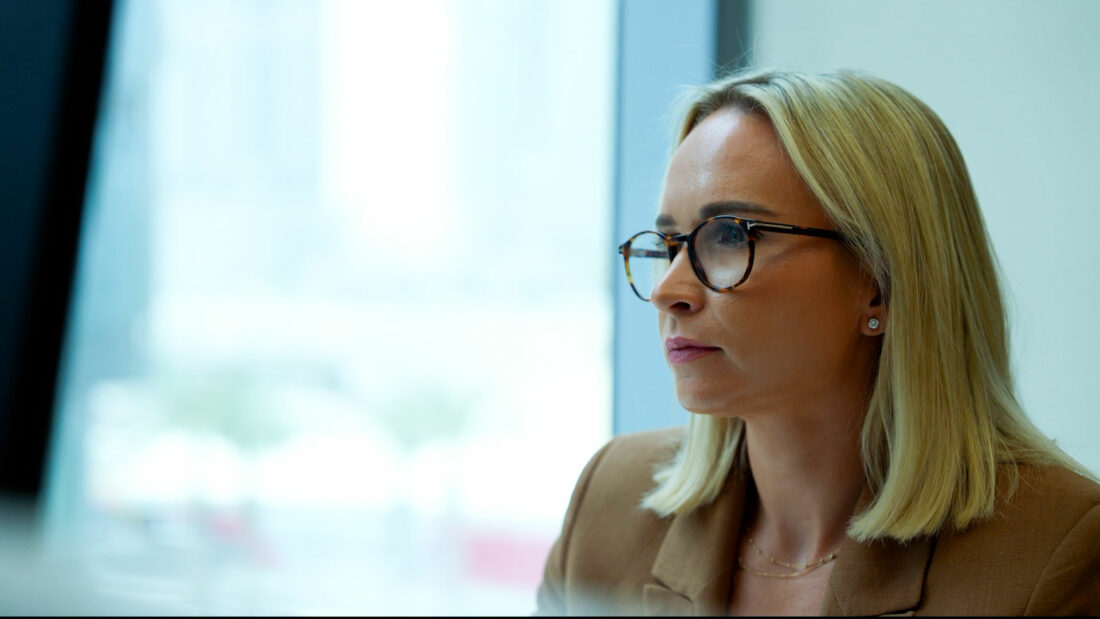
“Designers are being asked to deliver more, faster, and with greater accountability for what happens beyond the drawings,” says Philippa Jones, Senior Manager at Mart®. “Procurement decisions now sit much closer to the design phase because they directly affect what can realistically be delivered, when, and at what level of quality.”
Late-stage procurement issues such as unavailable products, long lead times, or unclear specifications, can quickly undermine carefully considered design intent. What once might have been seen as a delivery problem now feeds back into design decisions much earlier in the process. In practice, this means designers are increasingly required to balance creativity with commercial realism, often under intense time pressure.
The complexity of a global marketplace
At the same time, the furniture and interiors marketplace has become more global and more complex than ever before. On paper, access to international brands and suppliers should be an advantage. In reality, the sheer volume of choice can introduce new risks. Quality benchmarks vary. Ergonomic standards are not always clear. Information about aftermarket parts, maintenance, or lifecycle performance is often fragmented or difficult to verify.
“For many designers and clients, there’s a lack of transparency around what they’re actually specifying,” Philippa explains. “It’s not just about how something looks on day one, but how it performs over time, from ergonomics and durability to spare parts availability and warranties.”
These knowledge gaps are not trivial. In large commercial or institutional projects, a single specification decision can affect hundreds or even thousands of items. When information is incomplete, risk multiplies.
From cost control to risk management
While cost remains important, it is no longer the only, or even the primary concern for many clients. Increasingly, the bigger risks lie elsewhere: delays, re-specification, compliance issues, or unexpected lifecycle costs after handover.
End clients today want more value, not just lower prices. They expect extended warranties, reliable performance, and products that support long-term operational efficiency. Procurement, in this context, becomes a tool for managing risk rather than simply negotiating cost. This shift has changed the role procurement plays within projects. It now sits at the intersection of design quality, programme certainty, and business performance.
Why smarter sourcing is a competitive advantage
Against this backdrop, the idea of “smarter sourcing” has gained real traction. Not as a buzzword, but as a practical response to growing complexity. Smarter sourcing is less about buying cheaper products and more about improving visibility, reducing uncertainty, and enabling better decisions earlier in the process.
It relies on shared information, clearer workflows, and systems that support collaboration rather than fragmentation. This is where technology, when applied thoughtfully, can play a transformative role.
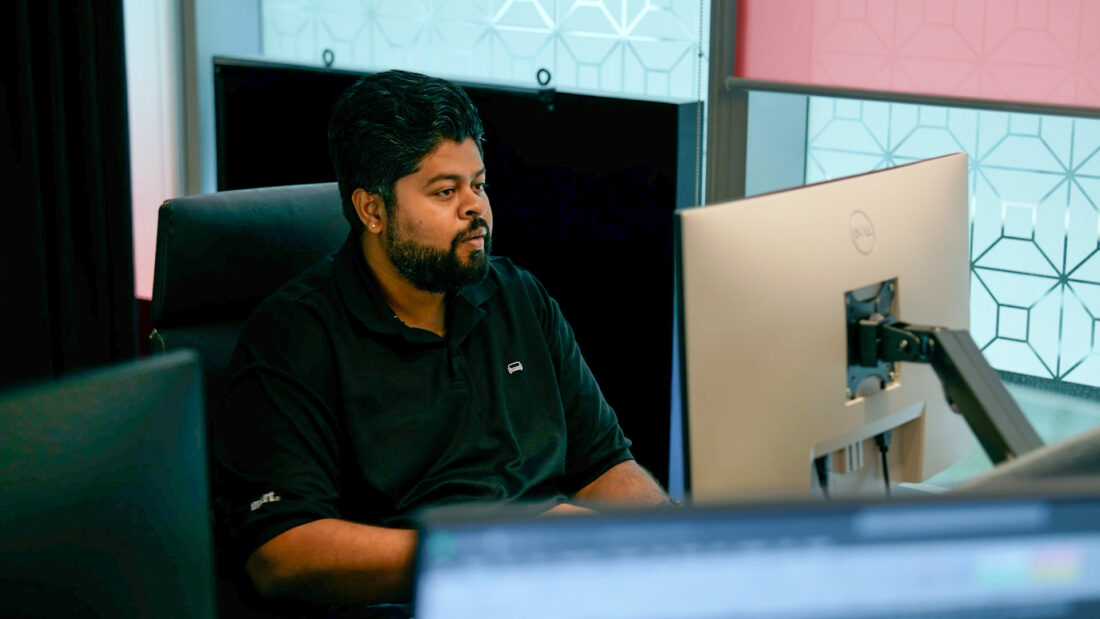
“Much of today’s procurement process is still slow, manual, and fragmented,” says Bharat Sankar, who heads platform development at Mart®. “Highly skilled professionals spend huge amounts of time chasing information, checking availability, and managing spreadsheets, instead of focusing on the value they bring.”
In large contract furniture projects, the challenge is magnified. Designers and procurement teams may be sourcing hundreds or thousands of complex product configurations from multiple international vendors, across different time zones and languages. Uncertainty around stock levels, lead times, or specifications creates delays and forces late-stage compromises.
“Technology should remove that uncertainty,” Bharat explains. “It should take the guesswork out of availability, configuration, and delivery, and simplify the entire end-to-end process.”
Technology as an enabler, not a distraction
Importantly, the role of technology in procurement is not to replace design expertise, but to support it.
“The goal isn’t to add another layer of complexity,” Bharat says. “It’s to simplify and accelerate the process so designers have more time to do what they do best, designing.”
When procurement systems are fragmented, information is duplicated, decisions are delayed, and accountability becomes unclear. By contrast, integrated, transparent workflows can increase speed, reduce errors, and give all stakeholders confidence in their decisions.
For clients, this translates into clearer expectations and fewer surprises. For designers, it creates space, time reclaimed from administrative tasks and uncertainty, and redirected back into creative and strategic work.
Breaking down silos
One of the most significant changes underway is cultural rather than technical. As procurement becomes more closely integrated with design and project delivery, traditional silos are breaking down. Designers, project managers, and procurement teams are increasingly expected to work in parallel rather than sequentially. Decisions happen earlier. Information is shared more openly. Responsibility is distributed more evenly.
“When procurement is treated as a collaborative process rather than a handover, everyone benefits,” Philippa notes. “There’s greater trust, fewer last-minute changes, and a much stronger alignment between design intent and delivery.”
This collaborative approach is particularly important in the Middle East, where project scale and speed leave little room for error.
A regional reality
The Middle East presents a unique set of challenges, and opportunities, when it comes to procurement. Large-scale developments, fast-track programmes, and diverse supply chains demand a level of coordination and clarity that traditional processes struggle to support. Regulatory requirements, compliance standards, and client expectations continue to rise.
In this environment, procurement systems must be built for scale, speed, and transparency. Those that succeed do more than support delivery, they enable better decision-making across the entire project lifecycle.
Procurement as a strategic design tool
The days of procurement being a purely transactional function are over. Today, it is a strategic tool that influences design quality, business outcomes, and long-term value.
Smarter sourcing is no longer a “nice to have”. It is a competitive advantage for designers seeking certainty, for procurers managing complexity, and for clients demanding better performance from their investments.
As projects become faster, more complex, and more demanding, the integration of design, procurement, and technology will only deepen. The most successful teams will be those that recognise procurement not as an afterthought, but as a critical part of how great design is delivered.