Znera Space: Rethinking Architecture In The Gulf
Shade, wind, and material should be design fundamentals in desert cities, yet internationalized forms keep drowning out local logic. The next revolution isn’t vertical; it’s contextual
By Nils Remess, Co-founder, ZNera Space
At 45 degrees in a Dubai summer, architecture either works or it does not. Shade, wind, and material are as critical as form. Yet as our cities race skyward, too many designs speak an international language of glass and steel, not the language of place. In a region transforming faster than almost any other, the question is not how high we can build, but how deeply our architecture can connect to the geography, culture, and climate that define it.
Across the Middle East, governments are aligning national visions around sustainability, liveability, and identity. The UAE Vision 2031, Saudi Vision 2030, and the UAE’s Net Zero 2050 Strategy outline ambitions for human-centred cities that balance innovation with environmental responsibility. Yet as urbanisation accelerates, architects must move beyond aesthetics to address a fundamental challenge: how to create design that reflects this region’s realities rather than replicating global models.
My approach has always been guided by the belief that context-first design is essential to meeting that challenge. It is neither an aesthetic movement nor a nostalgic look back at the past, but a strategic approach that begins with geography, climate, and community. It enables innovation that grows from local conditions rather than being imposed upon them. Context is not a constraint; for us at ZNera Space, it is the framework through which meaningful and resilient architecture emerges.
Designing for the Environment We Inhabit
Across the Gulf, urban temperatures average 5 to 7 degrees higher than surrounding rural areas, and cooling can account for up to seventy percent of peak electricity demand, according to the International Energy Agency. These figures make clear that environmental performance is a necessity, not an aspiration. Designing buildings that work with nature instead of against it must become the regional standard. When this thinking guides design, sustainability becomes instinctive rather than decorative.
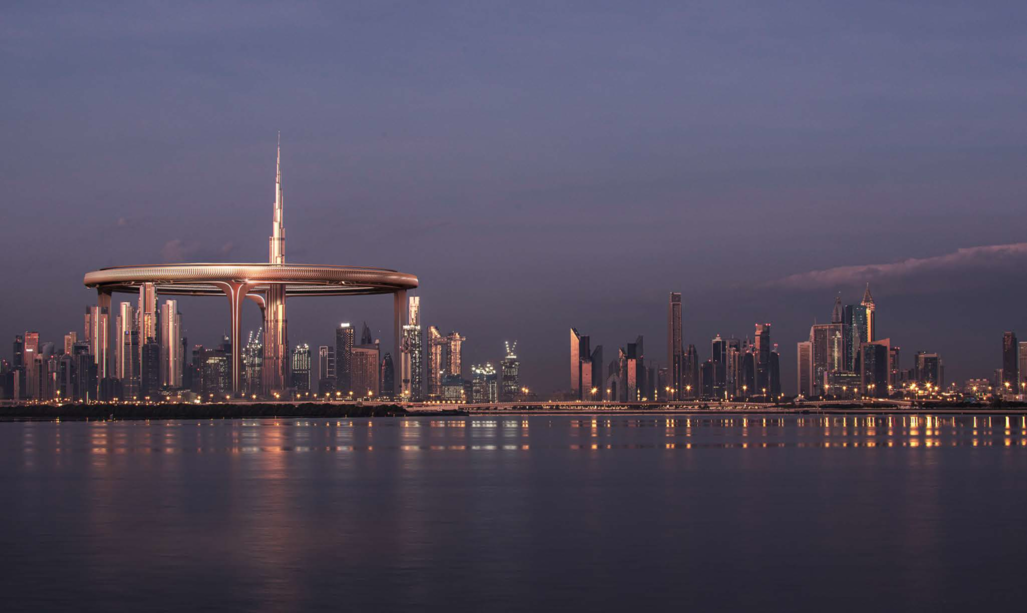
Projects such as Downtown Circle explore this principle. The experimental design study reimagines Dubai’s urban future through a circular city within a city. Rather than a construction blueprint, it serves as design research into how future urban centres could operate as self-contained ecosystems that integrate air purification, vertical farming, and shaded microclimates to sustain liveability at scale. The idea is not to reject density but to rebalance it so that human comfort and environmental health coexist.
Similarly, The Smog Project in Delhi investigates how architecture can function as civic infrastructure. Conceived as a network of air-filtering towers, it examines how the built environment might actively improve air quality in one of the world’s most polluted cities. Both concepts demonstrate how experimental design can provoke new thinking about the relationship between architecture and environment.
Context at the Human Scale
For ZNera Space, context-first thinking is equally powerful in everyday life. The GDP project in Dubai illustrates how these ideas translate into practice. The mixed-use development links commercial, residential, and communal areas through shaded walkways and courtyards that respond to the local climate. By respecting movement patterns and social rhythms, it shows how design can enhance comfort and identity in fast-changing neighbourhoods.
Our approach aligns closely with regional planning priorities such as the Dubai 2040 Urban Master Plan and Abu Dhabi’s Urban Planning Vision, both of which emphasise walkable, liveable, and climatically responsive cities. Achieving those ambitions requires more than technology; it depends on a renewed respect to the environment and culture that shape how people live.
Architecture as Cultural Continuity
Design rooted in place also protects cultural identity. In an era of globalised skylines, the Middle East risks losing visual and social distinctiveness. Design planned around holding onto integrity with innovation ensures that modernisation reinforces heritage instead of erasing it. National initiatives from Saudi Arabia’s Diriyah Gate Development Authority and AlUla masterplan to the UAE Ministry of Culture’s Architectural Identity Programme and Oman’s Sustainable Cities Initiative all recognise the importance of linking tradition with progress.
While preservation of history and culture is vital, architecture should not merely preserve history but reinterpret it to meet contemporary needs. Passive cooling, material efficiency, and community-centred planning have long been part of life in this region; the task now is to re-engineer those principles using new tools and technologies.
From Vision to Implementation
Policy frameworks are already steering the region toward measurable sustainability, including the UAE’s Green Building Regulations, the Estidama Pearl Rating System, and the Saudi Green Building Code. The next step is ensuring that these frameworks translate into solutions that work in practice. Imported sustainability systems often perform well on paper but struggle in the Gulf’s conditions of high heat, humidity, and dust. Solar panels, green façades, and cooling systems developed for temperate climates can lose efficiency or demand far greater maintenance here. The challenge is not adoption but adaptation — creating solutions that are engineered for the region’s climate and materials and tested through long-term performance rather than short-term innovation cycles.
Progress will depend on developing building typologies and technologies that are conceived, tested, and refined locally. That requires an integrated process where architects, engineers, and environmental scientists work together from the earliest design stages. It also means combining traditional passive design intelligence like deep shading, thermal massing, and natural ventilation, with contemporary digital modelling and environmental simulation. These tools can help predict how a building behaves across seasons, how materials age, and how users interact with space under different climatic pressures.
For architects, rethinking design starts with evidence rather than image. Instead of beginning with a global form and adapting it to the Middle East, we must design directly from the data of place: the path of the sun, the direction of prevailing winds, the capacity of locally sourced materials, and the social patterns that shape daily life. When these parameters define the brief, buildings perform naturally and efficiently, reducing dependency on mechanical systems. That is what makes architecture not only sustainable but truly regional in its intelligence.
A Regional Opportunity
The Middle East has the resources and ambition to redefine what architectural progress means. But genuine progress will not be measured in vertical metres, striking silhouettes, or just creating media headlines. It will be defined by buildings that contribute tangibly to environmental resilience and human wellbeing. As Gulf cities advance their national visions, the region has the opportunity to pioneer a model of development that is technologically advanced yet ecologically grounded.
This is the future we should be working towards: design that generates, restores, and protects. Context-first architecture is not about looking back; it is about designing forward with intelligence drawn from place. The region’s next chapter will be written by those who create spaces that perform for people, for climate, and for culture alike.