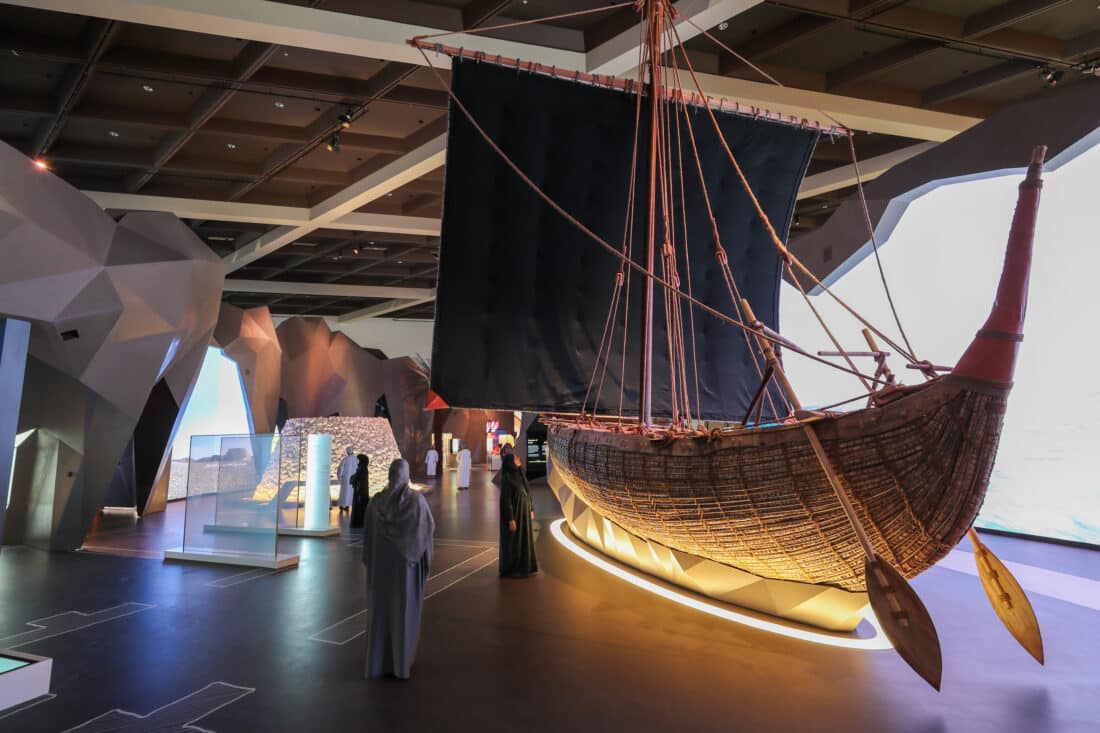
 The Oman Across Ages Museum, located near the ancient city of Nizwa, has opened its doors to the public for the first time. The 300,000-square-meter museum complex depicts the tale of Oman’s civilisations and dynasties, from prehistoric times to the present day, using cutting-edge technology to transport visitors on a voyage through the country’s history.
Event, the global experience and exhibition design agency, worked closely with the Royal Court of Affairs (RCA) to realise the vision of the late His Majesty Sultan Qaboos bin Said al Said (1940-2020) to create a hi-tech, interactive cultural venue that would speak to Omanis – especially the younger generations – about their country, culture and heritage, inspiring them to contribute to shaping the Sultanate’s future.
The scale and breadth of the Oman Across Ages Museum is unlike any other museum in the country – the permanent exhibition space alone is over 9,000m2 , with some galleries stretching more than 20m high. Event supported the process from start to finish, developing the initial museum concept and creating an architectural masterplan which provided a roadmap for the project. As the project’s exhibition designer, Event then worked hand-in-hand with appointed practice Cox Architects to ensure the architecture and exhibition design worked in harmony. With an on-the-ground presence in Oman, Event’s deep integration into Omani culture helped it to shape the content on display.
Upon entering the museum, visitors are invited on a vast, sweeping journey through time. Starting with the land’s geological formation and ending in modern day Oman, they fly through Page 1 of 3 different ages, dynasties and civilizations guided by the latest exhibition technology and storytelling techniques. The permanent exhibition wings are divided into two: The History Gallery and the Renaissance Gallery. The latter represents the country’s remarkable period of economic, technological, political and social modernisation beginning in the 1970s under His Majesty Sultan Qaboos bin Said al Said.
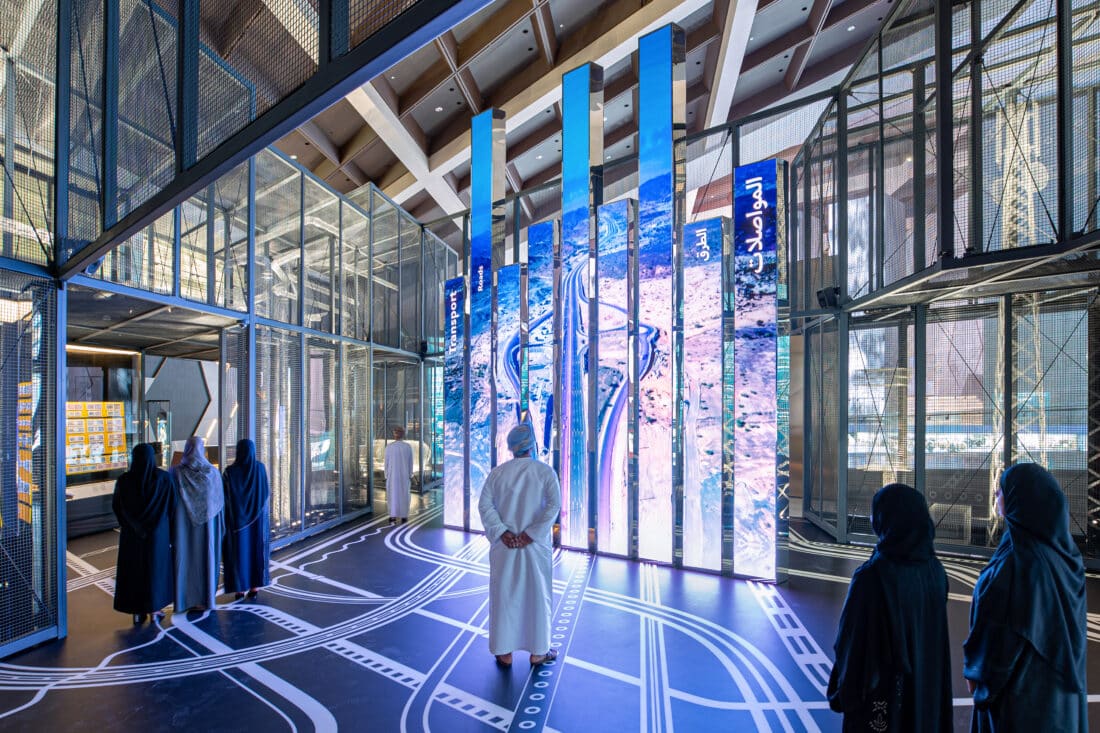
 There was a diverse array of techniques used to create a rich and layered exhibition experience that draws in audiences of all ages. Archival and contemporary film footage, photography and the considered use of augmented reality combine with object displays to spectacular effect. A tactile object or artefact introduces the theme of each space, forming a trail running through the core of the museum. Audio and tactile elements are integrated at every stage to make sure that all visitors are able to engage with the content, be it the jaw of the animal of Omantherium, a primitive elephant that lived 35 million years ago, or a scaled model of the Arabian Gulf Cup. There are more than 30 tactile stations and over 70 interactive screens located throughout the museum, encouraging hands-on interaction. Event has used state-of-the-art technologies to create transportive experiences that immerse audiences in different times and places.
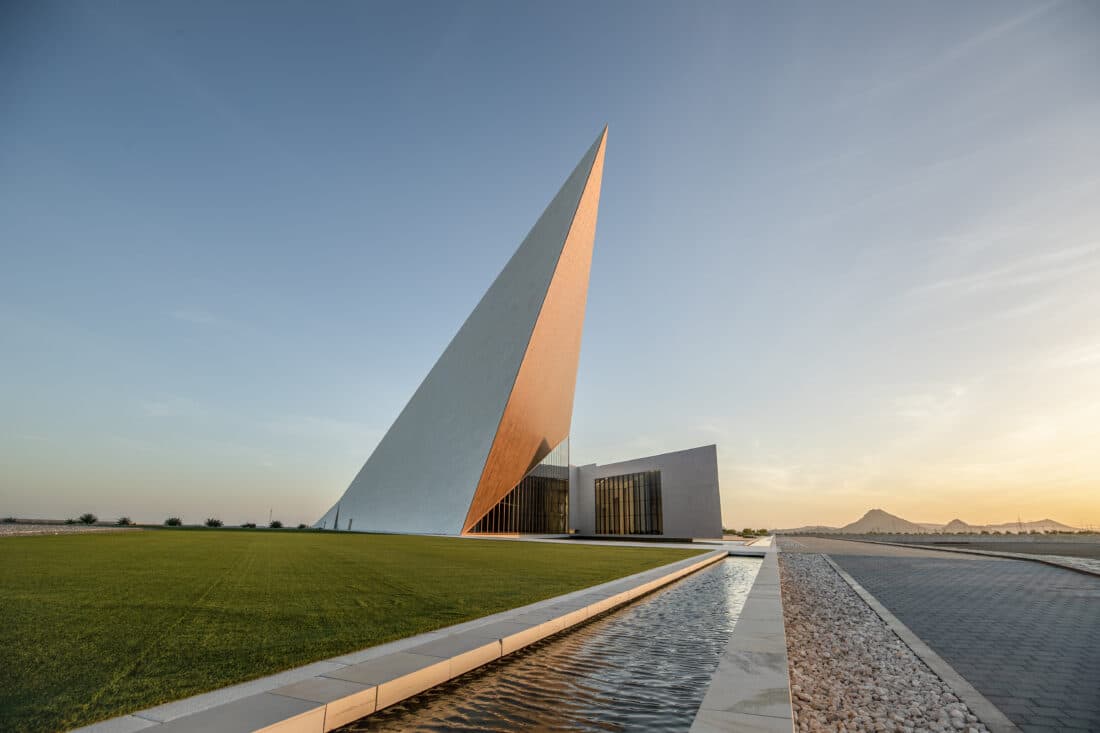
A moving floor and 360° theatre transports visitors through Oman’s economic landscape. Augmented reality has been used to overlay ancient peoples engaged in activities on the archaeological site plan and in front of the physically reconstructed huts in the prehistoric area. 3D scanning and printing has been used on an unprecedented scale to recreate a geological structure of folded rock. The museum emerges from the ground in a way that invokes the surrounding landscape, with the Hajar Mountains in the distance giving rise to the recurring triangular motif throughout the space. This can be seen in the History Gallery’s tessellated walls, which represent Omanis’ lasting connection to the land. In the section of the exhibition devoted to Islam, the tessellation transitions into a flowing ribbon structure, suggesting the impact of Islam as the ordering principle of Omani society.